Genevieve Weber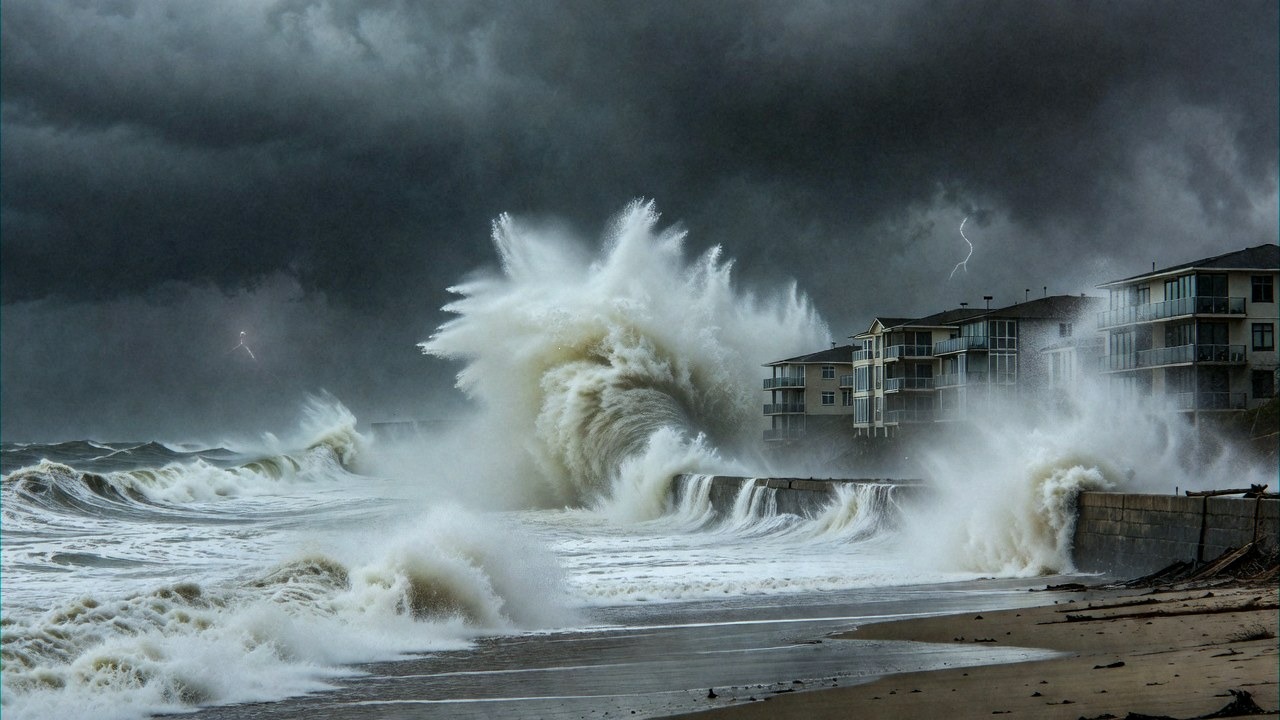
When the Warning Comes Too Late
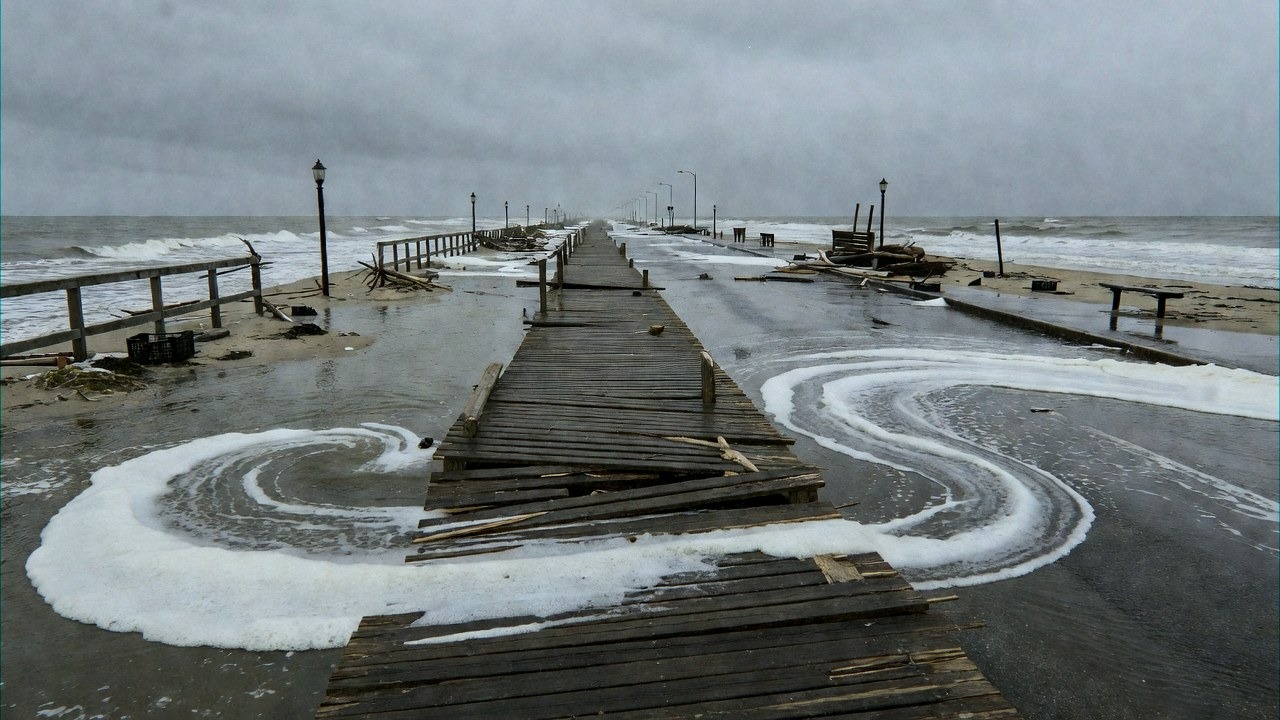
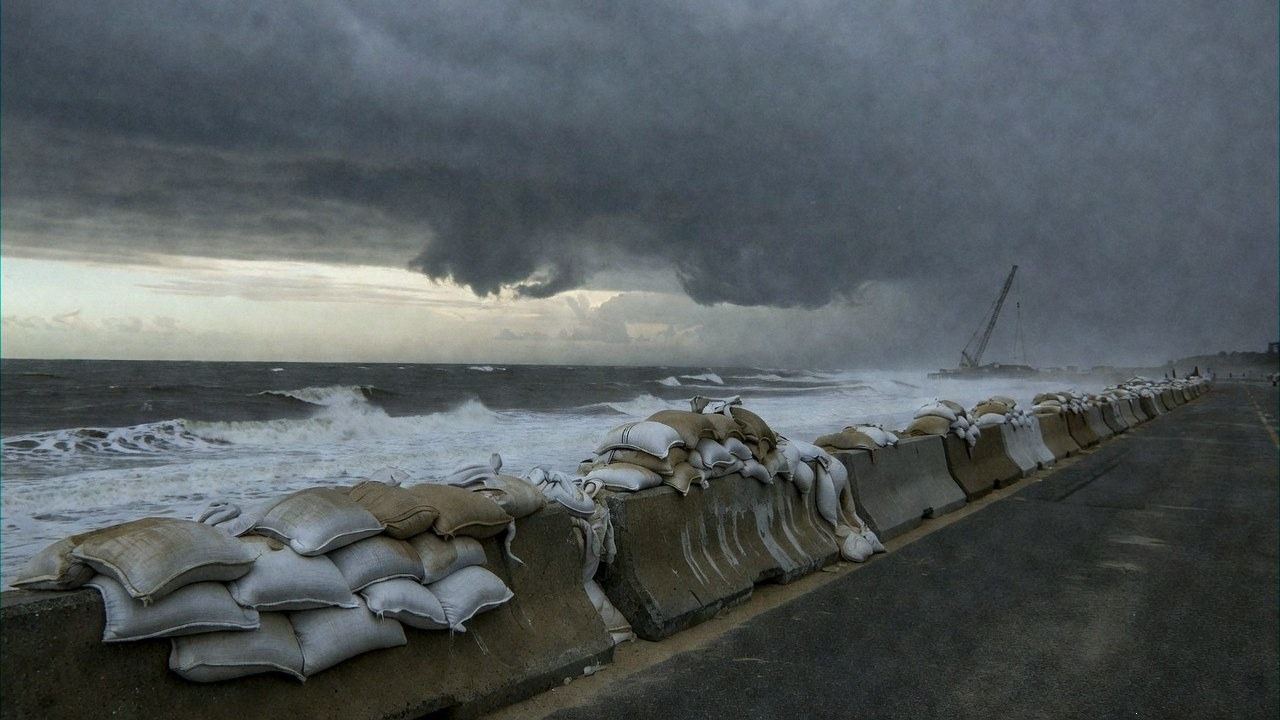
Eight buildings holding thirteen residences on the Long Beach Peninsula were red-tagged as unsafe by Saturday, and one more was yellow-tagged. Waves driven by Tropical Storm Rachel had torn through the timber of the neighborhood's protective boardwalk, overtopped the bulkhead between 64th and 66th Places on Seaside Walk, and pushed seawater into homes and streets. A crane had lowered thirty three-thousand-pound sandbags onto the failing wall at 64th Place. It did not hold.
The warnings were not late. They came early and they came often. Long Beach had proclaimed a local emergency. The National Weather Service draped a coastal flood warning over beaches from Malibu to San Diego. The city had handed out roughly 11,000 sandbags for this storm alone, about 18,000 across the three that have struck in six weeks.
That is the part worth studying. Rachel was not a failure of forecasting, and it was not a failure of warning. It was a test of whether a warning, even a well-made one, can move people out of the path of water. On the peninsula, the answer was mostly yes, but only some of them, and only just in time.
Three words for one ocean
Here is the thing most people never learn, and the thing that decides whether they leave. Long Beach did not issue one warning. It issued three, stacked on top of each other, and the difference between them is the whole ballgame.
An Evacuation Order is mandatory. Homes between the 64th and 66th blocks of Seaside Walk got that one, issued the evening of October 9. An Evacuation Warning, issued the next day, covers a wider ring across 64th, 65th and 66th Places and several hundred blocks of Seaside Walk. The city defines it as a potential threat to life and property, with residents prepared to leave at a moment's notice. Then an Evacuation Advisory covers everyone else on Naples Island, Treasure Island and the peninsula, and the city describes it as less serious than a warning.
Order sounds like a command. Warning sounds like an alarm. Advisory sounds like advice about parking. To a layperson, warning and advisory are close cousins, and both sit far below order, even though the gap between an order and a warning on this street was a few hundred feet. The geography compounds it. Three different legal statuses can land on two houses a few doors apart, and the resident at the edge of each zone has to work out which sentence applies to her, at night, with the surf already in the street.
There is a reason the tiers are shaped this way, and it is not coastal. California standardized the order and warning vocabulary after the wildfires of 2017 and 2018, when the problem was people failing to leave fast-moving flames. In that world the timeline is measured in minutes and hours: an order means go now, a warning means get ready. Water does not work on that clock. A storm surge is governed by the lunar cycle and barometric pressure, and it can build for a day before it spills. A language built for the speed of fire is being asked to describe the patience of tide, and the mismatch is where confusion is manufactured.
Why people stay
There is a second reason warnings fail, and it has nothing to do with how they are written.
Rachel is the third hurricane in six weeks. Mayor Rex Richardson said it plainly. We saw Hurricane Marie over Labor Day, he noted, which was followed soon by Hurricane Polo, and now Rachel. His framing was the strongest signal in the whole event: these kinds of impacts are not normal, they are unprecedented for our community.
He is right about the magnitude. He is also fighting human wiring. Evacuation researchers have a name for it. The Protective Action Decision Model, developed by Michael Lindell and Ronald Perry, describes how people actually respond to a threat: first they have to perceive it, then they mill, then they assess whether to act. The milling stage is the trap. People do not move when an alert arrives. They look over the fence. If the neighbor is still drinking coffee on the deck, or watching the crews work, the threat is quietly downgraded in the mind. When the unprecedented repeats, that downgrade happens faster. The first red tag frightens a neighborhood. The third one in six weeks starts to look like weather. People learn from the storm that did not hurt them, not from the warning about the one that might.
There is money in this too. By 2026 the private coastal insurance market in California has retreated far enough that many homeowners are on a state-run plan of last resort that is itself under strain. A resident weighing an evacuation is weighing what happens to an unguarded house, to water damage an insurer may dispute, to a loss the policy will not fully cover. Staying is not always bravado. Sometimes it is arithmetic.
And the peninsula is not one audience. It holds multi-generational owners with deep memory of past floods, short-term renters who arrived two days ago with no idea an alert system exists, let alone a signup for it, and service workers who commute in. A single alert assumes a single listener, one who watches the local news and knows her zone. That listener exists. She is just not everyone.
What actually moves people
None of this means warnings cannot work. It means most of them are built to be defensible rather than effective.
The research on protective action is consistent, and it is unglamorous. People act when a message is specific, local, confirmed and actionable. Coastal areas should prepare is none of those things. The 6400 block of Seaside Walk, leave by 6pm, take Second Street north is all four. The tile that names a street and a time outperforms the press conference that names a coast.
Channels matter just as much as words, and this is where a quiet technical choice shapes outcomes. The federal backbone for alerts is IPAWS, the Integrated Public Alert and Warning System, which pushes Wireless Emergency Alerts straight to every phone in a mapped polygon. Push beats opt-in, because opt-in systems like Long Beach's AlertLB capture only a small fraction of a city, often in the low teens as a percentage. Emergency managers hesitate to use WEA anyway, worried about over-alerting and about the polygon bleeding into unaffected blocks and breeding cynicism. So the most reliable channel stays underused, and the least reliable one carries the load.
The forecast itself has a translation problem. The cone of a storm track is a shape most of the public reads as the danger. For a storm that never makes landfall as more than a glancing blow, the cone is nearly useless. The National Weather Service has been moving toward impact-based decision support, describing consequences rather than just physical quantities, precisely because the public confuses wind speed with water volume. The danger from Rachel was never the wind at the center of that cone. It was the water pushed onto the peninsula by a storm far to the south, stacked on top of unusually high tides and berms already worn thin by two earlier storms. That is a compound hazard, and a graphic designed for one hazard cannot narrate it.
The test does not end on Sunday
The uncomfortable truth is that the Long Beach case is not a rare failure. It is a preview. The 2026 to 2027 El Nino season is only opening, and the same weekend Rachel hit California, Hurricane Simon was bearing down on Puerto Vallarta in Mexico as a Category 4, with forecasters warning of up to 30 inches of rain and dangerous landslides.
Put the two coasts side by side and the real story sharpens. Mexico runs its own color-coded warning matrix, the SIAT-CT system, broadcast nationwide from blue to red. It is a serious system, and it struggles where California struggles less: informal settlements, landslide-prone hillsides, and tourism economies that are reluctant to shout a warning that empties the hotels. California leans on capital, cranes and concrete. Mexico leans on reach and a color chart. Both are warning systems, and both are being tested by the same ocean. The storms in the Eastern Pacific do not check passports, but the institutions that warn about them stop at the border.
The answer is not louder warnings. It is warnings people already understand before they are needed, and a civil defence posture that treats the public as a partner rather than a crowd to corral. That means knowing your evacuation zone in advance, the way you know your own address. Drilling the three-tier language until it is ordinary. Using the opt-in neighborhood networks, such as the city's Community Emergency Response Teams, instead of turning willing residents away at the tape while cranes do the visible work, which quietly teaches a city that self-reliance is not wanted. Rachel gave Long Beach a rehearsal with real stakes. The next storm will grade the same material again.
Mayor Richardson is fond of the word unprecedented, and he is entitled to it. But the longer the pattern holds, the less unprecedented it becomes, and the less a city can borrow from shock. The warning that comes too late is not the one that arrives after landfall. It is the one that arrives on time, in good faith and in full detail, and no one moves.


 spysat